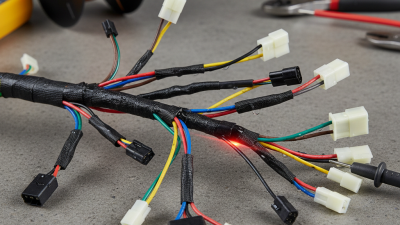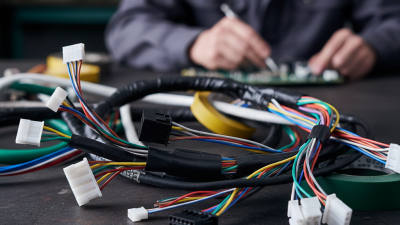
Choosing the right Wire Harness manufacturer can shape product quality, delivery stability, and long-term cost control. For global buyers, China offers a broad supplier base, from automated automotive harness plants to smaller specialists serving medical, industrial, and consumer electronics projects.
This guide introduces ten leading Chinese manufacturers for international sourcing teams. Each company should be reviewed through practical evidence, including factory capacity, engineering support, certifications, sample quality, and communication speed. A reliable supplier should explain conductor selection, terminal compatibility, insulation materials, testing procedures, and traceability without hiding behind general claims. Look for documented inspections, crimp-force monitoring, continuity testing, and clear production records. Details matter.
No list is perfect. Rankings can change as factories expand, lose key staff, or improve their quality systems. A large facility may still provide weak project support, while a smaller manufacturer may deliver better technical cooperation. Buyers should request drawings, prototypes, audit reports, and recent quality data before signing a contract. Speaking with existing customers can reveal issues that websites rarely show.
The manufacturers discussed here are selected for their market experience, engineering capabilities, production resources, and suitability for overseas cooperation. The comparison also considers response quality, customization flexibility, packaging discipline, and after-sales communication. These factors become visible when a harness must arrive with labeled branches, protected terminals, and consistent bend positions. Use this overview as a starting point, not a final decision. Careful verification remains essential.

A leading wire harness manufacturer in China does more than assemble wires. It converts drawings into stable production. Engineers should review current, voltage, temperature, bending radius, and connector fit before quoting. This practical review often reveals missing details. Small gaps become costly changes later. Ask for a sample harness, not only a price.
Reliable factories control materials from incoming inspection to final packing. They verify wire gauge, insulation, terminal crimp height, pull force, and continuity. Clear work instructions guide each station. Automated testers can detect open circuits and wrong connections. Yet machines are not enough. Skilled operators must examine seals, locks, labels, and branch protection. Photos and batch records make problems easier to trace.
For global buyers, communication is part of manufacturing quality. A capable supplier explains tolerances, tooling costs, lead times, and realistic production limits. It should support design changes without hiding risks. Ask how it manages nonconforming parts and corrective actions. Certifications can support trust, but they do not replace evidence. Factory audits, capability samples, and consistent shipment records matter more. No process is perfect. The strongest partner admits weak points and improves them openly.
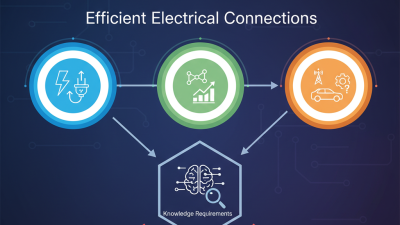
China’s top ten wire harness manufacturers serve different technical needs, not one universal market. Some specialize in automotive harnesses, with sealed connectors, branch protection, and strict routing control. Others focus on industrial equipment, where thicker cables and flexible bending cycles matter more.
Medical equipment suppliers usually emphasize clean assembly rooms, traceability, and low-noise signal wires. Consumer electronics manufacturers often handle compact harnesses, fine terminals, and high-volume production. Renewable energy specialists build longer cable assemblies for inverters, battery systems, and outdoor exposure. Each product area requires different testing methods.
A dependable manufacturer should provide crimp-force records, continuity testing, insulation checks, and sample approval reports. Factory audits should examine operator training, material storage, and change-control procedures. A supplier may show impressive machinery but still struggle with documentation or small-batch changes. That weakness deserves attention.
For transportation projects, ask about vibration testing, temperature cycling, and water-sealing performance. For industrial projects, review bend-radius limits and connector availability. Clear drawings, controlled samples, and stable communication reduce costly revisions. Yet even experienced buyers can overlook packaging damage during long-distance shipping. It is a small detail, but exposed terminals can create major delays. Supplier rankings are useful starting points, not final decisions. The best choice depends on product complexity, industry risk, testing depth, and the manufacturer’s willingness to disclose problems.
China’s top 10 wire harness manufacturers should be judged by controlled processes, not catalog claims. For global buyers, ISO 9001 shows a quality framework, while IATF 16949 supports automotive production. Medical projects may require ISO 13485. RoHS and REACH compliance also matter when materials enter regulated markets. Certification scope must match the factory, process, and product.
A reliable harness plant verifies wire specifications, terminal compatibility, and connector performance before mass production. Operators should record crimp height, crimp force, pull strength, and electrical continuity. Hipot testing can identify insulation failures. Visual checks should confirm routing, labels, seals, and locking positions. Barcode traceability links each assembly to materials, operators, machines, and test results. PPAP files, control plans, and first-article inspections provide useful evidence, but documents alone prove little. A polished file can hide uneven work between shifts.
Tips: Request recent audit reports, calibration records, and sample test data. Inspect the production line during a live build. Ask how rejected harnesses are isolated and corrected. Compare pilot samples with later lots. Small details matter. Even experienced buyers can overtrust a successful first shipment; that mistake deserves reflection. Define acceptance limits clearly, approve change-control procedures, and require advance notice for material, tooling, or process changes. A dependable supplier welcomes traceable evidence, not vague promises.
Global buyers should evaluate wire harness suppliers beyond catalog photos and quoted prices. An on-site audit reveals more. Check incoming copper, terminals, seals, and insulation against approved specifications. Ask how workers identify materials during each shift. Clear labels and barcode records reduce costly mix-ups.
Production capability starts with controlled inputs. Review crimp-force monitoring, applicator maintenance, and blade replacement records. Inspect sample boards for connector orientation, branch lengths, and protective sleeving.
A reliable supplier should provide electrical continuity, hipot, pull-force, and dimensional test results. Request several samples from different production days, not one polished prototype. Real production is less tidy.
Traceability matters when defects appear months later. Each harness should connect to an operator, machine, material batch, and inspection record. Study capacity using actual equipment counts, working hours, staffing, and peak-season plans.
A large factory may still lack capacity for complex, low-volume assemblies. Certification documents help, but they cannot replace process evidence. During audits, note small weaknesses, such as handwritten corrections or delayed calibration.
These details are easy to dismiss, yet they often predict future confusion. No supplier is perfect. The important question is whether the team reports problems early, investigates root causes, and verifies corrective actions with measurable evidence. Ask for a pilot run and compare its defect data with the agreed acceptance criteria.
Global buyers evaluating China’s top wire harness manufacturers should inspect export capability as carefully as assembly quality. Experienced suppliers provide commercial invoices, packing lists, certificates of origin, and transport documents with consistent data. They should explain Incoterms, lead times, and customs responsibilities before purchase. Ask for shipment photos, carton dimensions, and sample tracking records. Small errors become expensive at the border. Keep communication in writing.
Customization starts with usable engineering files, not a vague request. Share drawings, connector specifications, wire gauges, branch lengths, labeling rules, and target production volume. A capable manufacturer can review bend radius, terminal crimp requirements, insulation materials, and test points. Request first-article samples and continuity, insulation-resistance, and pull-force test records. Color coding and protective sleeving may need adjustment after installation trials. Field experience matters here. A harness can pass a bench test yet fit poorly inside a crowded enclosure.
Supplier selection should balance price, capacity, traceability, and response speed. Check whether incoming materials are recorded by batch and whether rejected parts are quarantined. Ask how engineering changes are approved and how nonconforming units are reported. Independent audits or recent customer references can strengthen confidence, but documents alone are not proof. A production-floor video call may reveal more than polished brochures. No checklist is perfect. Compare pilot-order results with promised timing, because optimistic quotations sometimes hide weak planning. Choose payment and inspection terms that match risk, destination, and product complexity.
| Rank | Supplier Profile | Typical Manufacturing Region | Core Product Scope | Customization Options | Testing and Quality Controls | Export Services | Common Target Industries | Typical Prototype Lead Time | Best Selection Strength |
|---|---|---|---|---|---|---|---|---|---|
| 1 | Profile A | Pearl River Delta | Automotive, industrial, and equipment wire harnesses | Custom lengths, connector selection, branch layouts, labels, overmolding, and protective sleeving | Continuity, short-circuit, hipot, resistance, pull-force, and visual inspection | OEM documentation, export packing, commercial invoices, packing lists, and shipment coordination | Automotive components, machinery, energy equipment, and control systems | 7–15 working days | Engineering support |
| 2 | Profile B | Yangtze River Delta | Consumer electronics, appliances, and low-voltage cable assemblies | Fine-gauge wires, terminal crimping, heat-shrink tubing, braided sleeving, and compact assemblies | Crimp-height checks, continuity testing, insulation checks, and first-article inspection | Small-batch export support, sample approval, carton labeling, and courier or sea freight coordination | Home appliances, consumer devices, lighting, and electronic equipment | 5–12 working days | Low-volume flexibility |
| 3 | Profile C | Pearl River Delta | New-energy vehicle, battery, and charging-system harnesses | High-voltage cable assemblies, shielding, orange conduit, busbar connections, and sealing solutions | Insulation resistance, hipot, milliohm resistance, continuity, sealing, and dimensional inspection | Technical files, traceability records, export packaging, and regulated-product shipping coordination | Electric vehicles, battery storage, charging equipment, and power electronics | 10–20 working days | High-voltage capability |
| 4 | Profile D | Jiangsu and Zhejiang | Industrial automation, robotics, and control-panel harnesses | Multi-branch assemblies, drag-chain cables, custom terminals, ferrules, and panel wiring kits | Continuity, cable identification, torque checks, crimp inspection, and functional testing | BOM review, drawing control, export cartons, palletization, and freight-forwarder coordination | Robotics, factory automation, instrumentation, and industrial machinery | 8–18 working days | Complex assemblies |
| 5 | Profile E | Fujian and Guangdong | Marine, outdoor, and waterproof cable harnesses | Waterproof connectors, adhesive heat shrink, molded seals, corrosion-resistant terminals, and UV-resistant jackets | Continuity, insulation, waterproofing, visual, pull-force, and terminal-crimp testing | Export cartons, moisture protection, labeling, documentation, and sea or air shipment support | Marine equipment, outdoor lighting, agricultural machinery, and recreational vehicles | 10–18 working days | Environmental protection |
| 6 | Profile F | Shandong and Hebei | Heavy-equipment, agricultural, and construction-machine harnesses | Large-gauge cables, abrasion protection, sealed connectors, conduit, and rugged branch protection | Continuity, resistance, connector retention, dimensional, visual, and load-related inspections | Bulk-order planning, export packing, pallet loading, certificates of origin, and logistics coordination | Construction equipment, tractors, mining machinery, and material-handling systems | 12–25 working days | Rugged construction |
| 7 | Profile G | Anhui and Jiangsu | Medical, laboratory, and precision equipment cable assemblies | Clean routing, custom labels, shielded cables, compact connectors, strain relief, and controlled assembly processes | Continuity, insulation, hipot, visual inspection, dimensional checks, and batch traceability | Controlled documentation, batch records, export labeling, and sample retention support | Medical devices, laboratory instruments, diagnostic equipment, and measurement systems | 10–20 working days | Traceability |
| 8 | Profile H | Guangdong and Guangxi | LED lighting, signage, and renewable-energy harnesses | Outdoor connectors, DC assemblies, solar-related cable sets, waterproofing, and customized plug configurations | Continuity, polarity, insulation, waterproofing, visual, and connector-fit testing | Container consolidation, carton labeling, export documents, and international freight coordination | LED lighting, solar equipment, signage, garden equipment, and power distribution | 7–16 working days | Cost efficiency |
| 9 | Profile I | Zhejiang and Shanghai area | Telecommunications, data, and signal cable assemblies | Shielding, twisted-pair configurations, coaxial assemblies, custom lengths, boots, and strain relief | Continuity, insulation, pinout verification, shielding inspection, visual, and insertion-force checks | Sample approval, export packing, barcode labeling, documentation, and air or sea freight support | Networking, communications, security systems, test equipment, and data infrastructure | 5–14 working days | Signal integrity |
| 10 | Profile J | Chongqing and Sichuan | Motorcycle, vehicle, and general transportation harnesses | Custom connector layouts, fuse boxes, relays, protective tubes, labels, and molded junctions | Continuity, short-circuit, insulation, pull-force, terminal insertion, and visual inspection | Export documentation, consolidated shipments, packaging customization, and delivery scheduling | Motorcycles, automotive aftermarket, utility vehicles, and transportation equipment | 8–18 working days | Production scalability |