How to Choose the Right Board Wire for Your Projects?
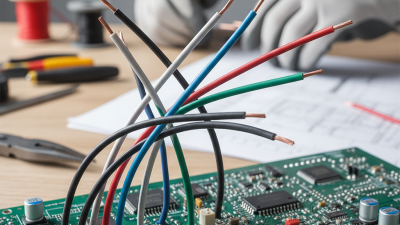
Choosing the right board wire for your projects can be daunting. The options seem endless, but understanding your needs is key. Board wire is an essential component in electronics, connecting various components effectively.
Different projects require specific types of board wire. Factors like gauge, insulation material, and flexibility are critical for performance. High-quality board wire ensures durability and reliability. But how do you know which type suits your unique application?
Many people overlook the importance of these details. They often choose based solely on availability or cost. Yet, the wrong board wire can lead to poor connections or even project failure. This guide aims to clarify the complexities surrounding board wire selection. By reflecting on your project requirements, you can make the best choice.
Understanding Different Types of Board Wire and Their Uses
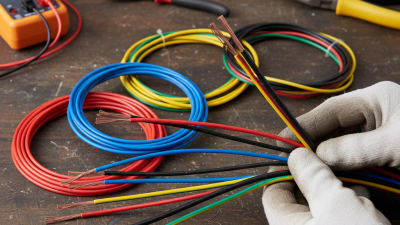
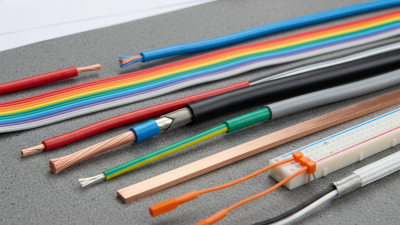
When selecting the right board wire, understanding its types and uses is essential. Common types include solid core, stranded, and flexible wire. Solid core wire is ideal for stable connections in static applications. Stranded wire, with its multiple strands of copper, offers greater flexibility, making it perfect for moving parts. Flexible wire tightly holds its shape, providing ease in complex layouts. Knowing these distinctions helps avoid frustrating setbacks during projects.
In terms of wiring gauge, remember its importance. A higher gauge number means thinner wire. Thinner wires are suitable for low currents but can increase resistance. Consider the current your applications will require. Using under-rated wire can lead to overheating and failures. An informed choice will ensure safety and dependability in your projects.
Selecting the right insulation is also crucial. PVC provides basic protection, while silicone caters to high temperatures. Evaluate your project's environment to make an informed choice. Using the wrong insulation can jeopardize performance. Therefore, always analyze the specific needs of your project carefully.
Types of Board Wire and Their Common Uses
Evaluating Wire Gauge and Its Impact on Project Performance
Wire gauge is a crucial factor in project performance. It determines the current-carrying capacity of your wiring. Choosing the right gauge can enhance efficiency and reduce energy loss. A thinner wire conducts heat more easily but can lead to inefficiency. Meanwhile, a thicker wire often handles higher current without overheating.
Different projects demand different wire gauges. For low-power applications, a higher gauge number may suffice. Yet, for high-power devices, selecting a lower gauge ensures safer operation. Assess the voltage drop across your wire over distance. As the length increases, so does the resistance. This results in less voltage reaching your components.
Understanding the trade-offs in wire gauge is essential. Overestimating your needs may lead to unnecessary costs and heavier installations. Conversely, underestimating can cause system failures or poor performance. Regularly re-evaluating wire choice can help in adapting to changing project requirements. This reflective approach ensures optimal functionality in your projects.
Identifying Insulation Materials for Enhanced Durability
When selecting the right board wire for your projects, the choice of insulation material is critical for durability. A report by the National Electrical Manufacturers Association (NEMA) indicates that wires insulated with high-quality materials can enhance longevity by up to 30%. This can significantly reduce the costs associated with replacements and repairs.
Polyvinyl chloride (PVC) is commonly used due to its flexibility and resistance to abrasion. It performs well in ordinary humidity levels. However, in extreme environments, it may not hold up as expected. For harsher conditions, materials like cross-linked polyethylene (XLPE) provide excellent thermal resistance. A study shows that XLPE can withstand temperatures up to 90 degrees Celsius without losing integrity. Both materials have their pros and cons. Understanding these nuances can make a substantial difference in project outcomes.
It's essential to consider the specific requirements of the application. Factors such as chemical exposure and mechanical stress can compromise wire integrity. According to a report from the Institute of Electrical and Electronics Engineers (IEEE), nearly 15% of wire failures originate from inadequate insulation choice. Therefore, conducting a thorough assessment before selection is crucial for ensuring the success of your electrical projects.
Assessing Voltage and Current Requirements for Your Board Wire
When selecting board wire for electrical projects, understanding voltage and current is crucial. Voltage ratings dictate how much voltage the wire can safely handle. Commonly, most wires are rated between 300V to 600V. However, it's important to verify these ratings using industry resources such as the National Electric Code (NEC). This ensures compliance and safety for your specific application.
Current capacity, or ampacity, significantly impacts wire choice. The ampacity of a wire depends on its gauge and insulation type. For instance, a 14 AWG wire typically handles up to 15 amps, while a 12 AWG wire can handle about 20 amps. It's essential to calculate the total current load. Oversizing can mitigate heat buildup but may increase costs unnecessarily.
Consider wire insulation as well. Certain projects need wires that withstand high temperatures or humidity. PVC insulation often suffices, but Teflon may be needed for extreme conditions. Researching insulation types from reliable electrical engineering resources helps ensure you choose appropriately.
Check your wire choice against reliable data reports for current ratings. Aim for a safety margin above your calculated load. This common practice minimizes risks of overheating. If using multiple strands, factor in their combined capacity to prevent circuit failures, as these often occur with inadequate planning. Aim for clarity and precision in your project specifications to avoid common pitfalls.
How to Choose the Right Board Wire for Your Projects?
| Wire Gauge (AWG) |
Current Capacity (Amps) |
Voltage Rating (Volts) |
Material |
Typical Applications |
| 18 |
10 |
300 |
Copper |
Low-power electronic devices |
| 16 |
13 |
300 |
Copper |
LED lighting, small appliances |
| 14 |
15 |
300 |
Copper |
Automotive applications |
| 12 |
20 |
600 |
Tinned Copper |
Power tools, heavy machinery |
| 10 |
30 |
600 |
Copper |
Industrial equipment, robotics |
Best Practices for Soldering and Connecting Board Wire in Projects
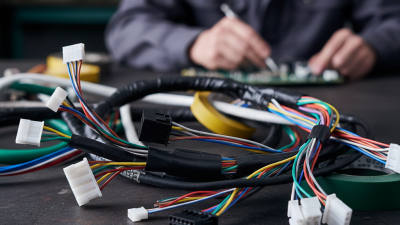
Soldering and connecting board wire is a critical aspect of electronics projects. Proper techniques ensure reliable connections. According to a 2022 industry report, nearly 40% of electronic failures are due to poor solder joints. This highlights the importance of mastering soldering skills.
When soldering, use the right temperature. Too hot can damage components. Too cold leads to weak joints. A temperature range of 350-400°F is generally recommended. Cleanliness matters, too. Ensure surfaces are free from contaminants. Use isopropyl alcohol to prepare the area. This simple step can significantly improve connection quality.
Different wire gauges are suitable for various applications. Thicker wires handle higher currents but are less flexible. Thin wires are more pliable but can’t carry as much power. Adhering to the American Wire Gauge (AWG) system can guide you in making the right choice. Missteps in wire selection can lead to project failures. Reflect on each connection made to ensure durability and reliability. Experimenting with different techniques can reveal what works best for you.