How to Choose the Right Tactile Switch for Your Project?
Choosing the right tactile switch is crucial for any electronic project. Renowned expert Dr. Sarah Davis, a tactile switch industry leader, emphasizes, "The feel and response of a tactile switch can make or break user experience." This highlights the importance of understanding the different options available.
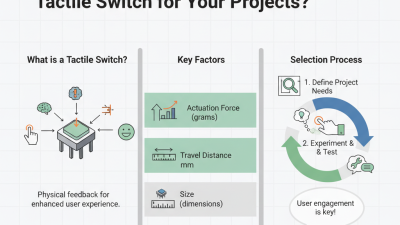
Tactile switches are available in various designs and specifications. Factors such as actuation force, travel distance, and feedback type are vital. Selecting the right combination affects functionality and user satisfaction. It's easy to overlook these details, but doing so can lead to a frustrating experience when your project is completed.
Not every tactile switch will meet project needs. Misjudging specifications can result in poor performance. Reflecting on previous experiences can provide valuable insights. Ultimately, making a well-informed choice about tactile switches impacts the overall success of your project.
Understanding Tactile Switches: Definitions and Types
Tactile switches are essential components in various electronic devices. Understanding their types can help you choose the right one for your project. Generally, tactile switches provide a noticeable feedback when pressed. They come in various shapes, sizes, and actuation mechanisms, impacting user experience and device performance. According to industry reports, the global tactile switch market is expected to grow significantly, driven by increasing demand in consumer electronics.
A common type is the momentary switch, which completes a circuit only while pressed. These are ideal for applications requiring temporary user input. Another type is the latching switch, which remains in its new position until pressed again. Latching switches are suitable for devices needing a constant on/off state. It's crucial to evaluate the actuation force too. Research suggests that most users prefer actuation forces between 50 to 70 grams for optimal feedback.
Selecting the right tactile switch requires attention. Consider the application environment. Dust, moisture, and temperature variations can affect performance. Choosing the appropriate sealing type can enhance durability. Remember that tactile switches may wear over time. Evaluate the lifecycle and maintenance requirements before finalizing your choice. Testing different switches can help determine which one meets your project's needs effectively.
Key Specifications of Tactile Switches: Actuation Force and Travel Distance
Choosing the right tactile switch for your project involves understanding key specifications like actuation force and travel distance. Actuation force refers to the amount of pressure needed to activate the switch. Typical values range from 45g to 60g, according to industry reports. This variability allows designers to create user interfaces tailored to specific applications. Heavier switches can enhance tactile feedback, but they may lead to user fatigue during prolonged use.
Travel distance is another critical specification. It is the distance the switch moves before activation. Most tactile switches have a travel distance between 1.5mm and 3.0mm. Shorter distances can enable quicker responses, which is vital for gaming devices or high-precision applications. On the other hand, longer travel distances may provide a more pronounced tactile sensation, favored in typing-oriented projects.
Both specifications impact user experience significantly. Finding the right balance between actuation force and travel distance is essential. A mismatch can lead to frustration or errors in operation. Designers should prototype various combinations before finalizing their choice. This iterative process can help identify the optimal tactile feel for a project. Testing with real users can reveal unexpected preferences and promote a deeper understanding of tactile feedback dynamics.
Evaluating Durability: Lifecycle Ratings of Tactile Switches in Applications
When selecting a tactile switch for your project, durability is a key factor. Lifecycle ratings offer valuable insights into how long a switch will perform under expected conditions. Tactile switches generally come with lifecycle ratings that indicate their durability, often expressed in number of cycles. For example, a switch rated for one million cycles should last longer in frequent-use applications.
It's important to consider the environment where the switch will be used. Factors such as humidity, temperature, and exposure to dust can affect performance. A switch that works well in a controlled setting might fail prematurely in a harsher environment. Testing under real conditions is always advisable.
Consider the feedback you need. A tactile feel can enhance user experience, but it should not compromise reliability. Assess how often the switch will be operated. A higher cycle rating is ideal for devices that require frequent interaction. In contrast, a lower-cycle-rated switch might suffice for less frequent tasks. Aim for switches that are rated higher than your expected use to build in a buffer for longevity.
Evaluating Durability: Lifecycle Ratings of Tactile Switches
This chart displays the lifecycle ratings of various tactile switches, measured in cycles. A higher number indicates greater durability and longer-lasting performance in applications.
Selecting the Right Actuation Mechanism: Momentary vs. Latching Switches
When choosing a tactile switch, understanding the actuation mechanism is crucial. Momentary switches only activate while pressed. This can be ideal for applications where intermittent activation is required. For example, a doorbell or a gaming controller relies on such switches. When users release the button, the circuit cuts off power. This design is straightforward, but it can lead to accidental activation if not properly managed.
On the other hand, latching switches remain in the last position after being activated. Once engaged, they stay on until pressed again. This type is useful in situations where users want a persistent state, like keeping lights on. However, this can introduce complexity. Users might forget if a light is on, leading to energy waste or confusion. Understanding these nuances ensures you select the right switch for your project. Each option has its merits and drawbacks based on your specific needs. Reflect on scenarios and consider how the actuation method will impact the user experience.
Assessing Environmental Factors: IP Ratings and Their Impact on Switch Selection
When selecting a tactile switch, environmental factors play a crucial role. IP ratings, or Ingress Protection ratings, indicate how well a switch can withstand dust and moisture. Understanding these ratings helps in making the right choice for your project. For instance, an IP67 rating means the switch can be submerged in water up to one meter. This level of protection is vital for outdoor applications or areas prone to spills.
Consider the environment where the switch will be used. A switch exposed to dust may require a higher IP rating. Components can fail if not adequately protected. Sometimes, it’s tempting to go for lower-rated options to save costs. However, this can lead to reliability issues later on. Even a small amount of water can cause malfunction over time.
Additionally, evaluate the temperature and humidity levels of the project environment. Certain switches have specific operating ranges. Ignoring these can lead to performance issues. It’s essential to reflect on how different conditions can impact the longevity of the switch. Making informed decisions now can prevent regrets in the future.